This blog has been more or less quiet for the last 5 years.
In that time, I’ve given my heart and soul to being the Associate Dean of Education for Kent Business School. It’s been thousands of hours of coaching and mentoring colleagues, emails, work on university committees, designing and redesigning courses, working with students to support them and improve their experiences, emails, recruitment and outreach activity, writing and rewriting strategy documents, reports, meetings, meetings about reports, organizational politics, and replying to emails. I’m working on a long-form reflection on the work that I hope to send off for publication, but outside of the confines of that article, I’ve been reflecting that the AD Education role is interesting for the things that I didn’t do in the last 5 years – the opportunity costs and things that got left behind – this blog being one of those.
In many senses, the all-consuming morass of the work meant that at times, my future seemed altogether determined: Associate Dean until you’ve accrued enough experience and time managing larger university-level projects, then take a run at a Head of Department/Deputy Dean role at another university, or stretch it and go for a DVC Education or Dean job. The prospect of career progression is the worm on the hook of the microfascist allure of managerialism – spiralling me ever further up a career ladder that I never would have predicted. At some point along the way, my ability to see another future for myself disappeared altogether, and I assumed that this is what my career would look like: managing academics rather than getting to be one. Managerial subjectivities were all that seemed available for me to inhabit.
In his k-punk blog, the book Ghosts of My Life, in several essays, and of course, the famed essay of the same name, Mark Fisher draws on Derrida to advance the term “hauntology”, partially decoupling it from the pun and Marxist context in which Derrida developed it and using it in a more general waythat we can summarize as the following:
“What haunts the digital cul-de-sacs of the twenty-first century is not so much the past as all the lost futures that the twentieth century taught us to anticipate. […] More broadly, and more troublingly, the disappearance of the future meant the deterioration of a whole mode of social imagination: the capacity to conceive of a world radically different from the one in which we currently live.”
Fisher tries to describe that feeling of being haunted by the futures that we have lost. That in a moment of cultural stagnation and homogenization, the endless and terminal reproduction of the same, we have lost the ability to imagine the new. The horizon of possibility closes, and it becomes impossible to think anything other than what is. To conceptualize alternative futures and modes of living is an aptitude that has been lost to us. Elsewhere he summarizes:
“one function of hauntology is to keep insisting that there are futures beyond postmodernity’s terminal time. When the present has given up on the future, we must listen for the relics of the future in the unactivated potentials of the past.”
In a much simpler, and thus more self-obsessed way, I’ve been thinking about the “relics of the future” that lie in my past. Those things that I will have given up and passed over, that will have been lost while my future seemed closed to me.
There is of course a future in which I will never have been Associate Dean of Education – where I turned down Marian’s offer of the role and kept quietly plodding along with my research. I’d probably have found a way to do a most likely unfunded ethnography of a British High Street when the decline of the high street was still prevalent in the news and would have likely still been doing it when COVID-19 hit. I wouldn’t have stopped being a regular at conferences like EGOS and CMS (to say nothing of the Deleuze Studies conference), wouldn’t have passed on opportunities to write textbooks, edit books, and certainly wouldn’t have let so many opportunities to co-author or collaborate with colleagues go cold. I’ve been, in what must be its own kind of pathologically terminal nostalgia, going over old notes and clippings from 2019, 2020 etc. and feeling that curiously “dogged” feeling of being “on the hunt” again. Writing has always felt like opening yourself up to possession – letting something else speak through me – and the moment of possession is something I’ve always chased after.
But it is the unwritten work that haunts me now, that unactualized potentiality, the absence of the possession, that trace of the could-have-been that seems to mark out an alternative future.
This is not to say that all the potential futures were positive. There are surely some where I moved universities, took a job in a bigger city, and things didn’t work out. Others still where I didn’t get publications out, couldn’t make a case for promotion, and remained stuck as a Grade 7 Lecturer for all of this time. Others still where illness or personal circumstances stopped me from doing well at my teaching. My present holds so many encounters, all of which seem to have been random chance, in its mosaic form – sitting next to a partial connection on a train, hearing an interesting paper at the Deleuze Studies Conference, three different interview panels not being able to choose a permanent AD Education so that I was offered the role, a strange student question, a supportive mentor who treated me like family – that it is impossible to think of the myriad futures that now insist upon the present.
I’ve taken to thinking about hauntology in terms of silences. The tumultuous noise of the terminal decline of culture in the present struggles to be audible over the still and insistent silence of the alternative futures that are truly unthinkable. There is an uncomfortable uneasiness in being able to hear the silence that I think shapes our politics and which shapes how I feel right now, the next few years open to me as I think about where my career should go next.
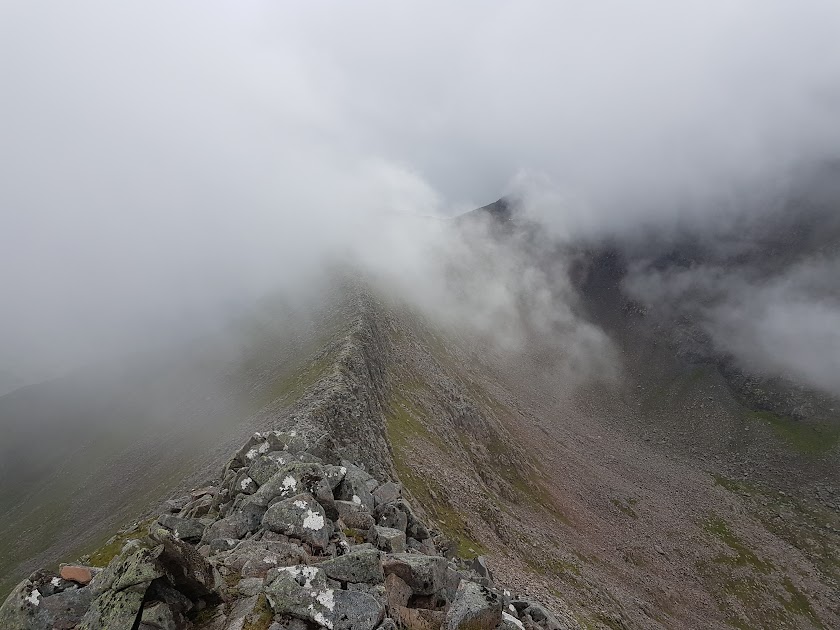
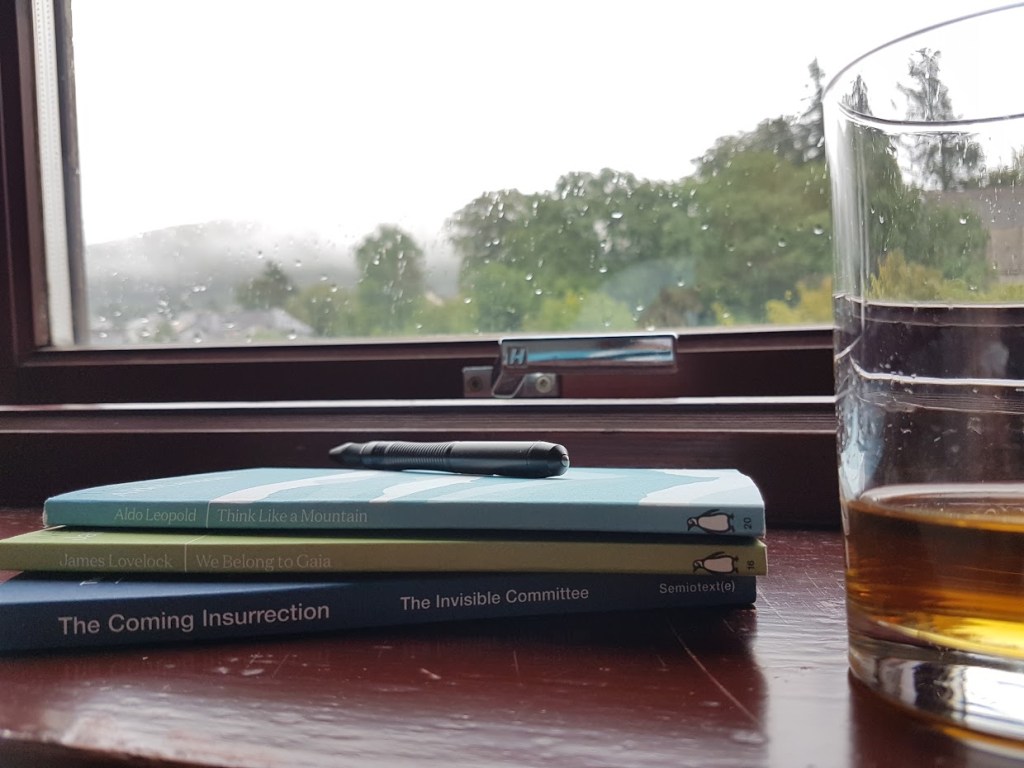
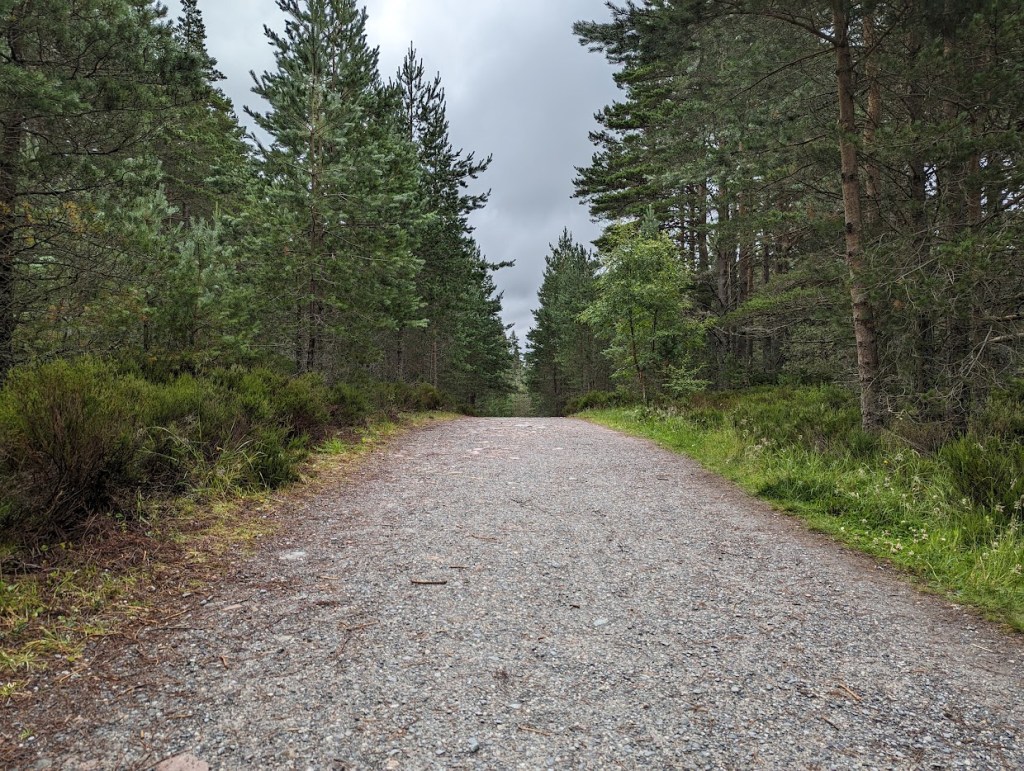
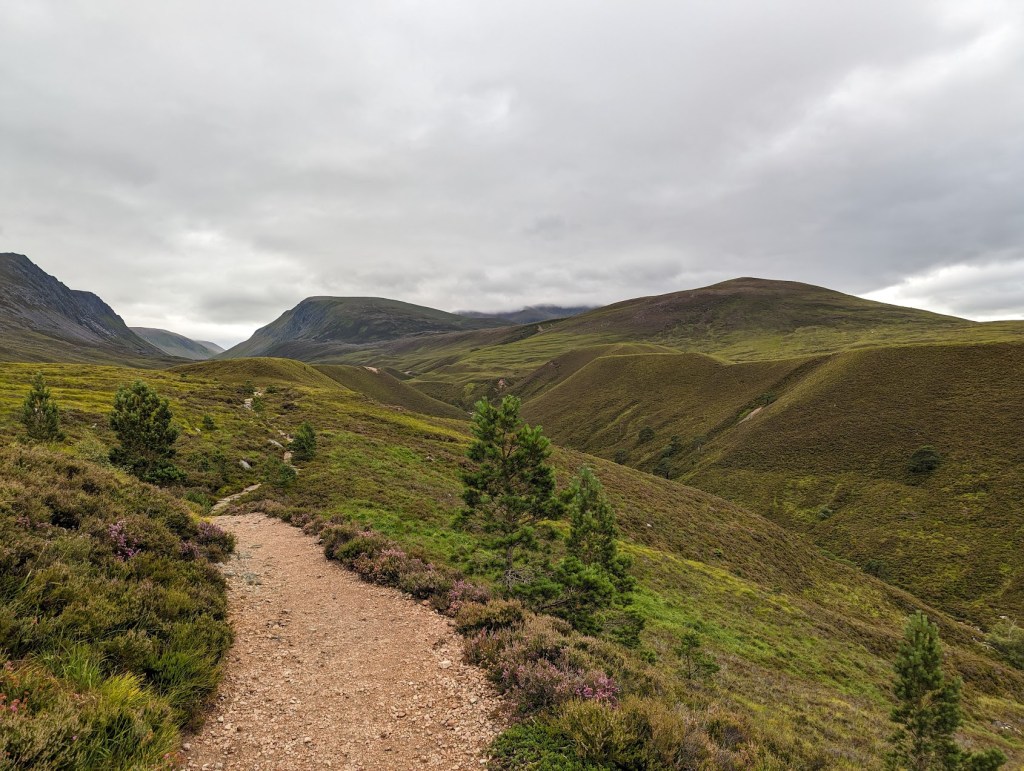
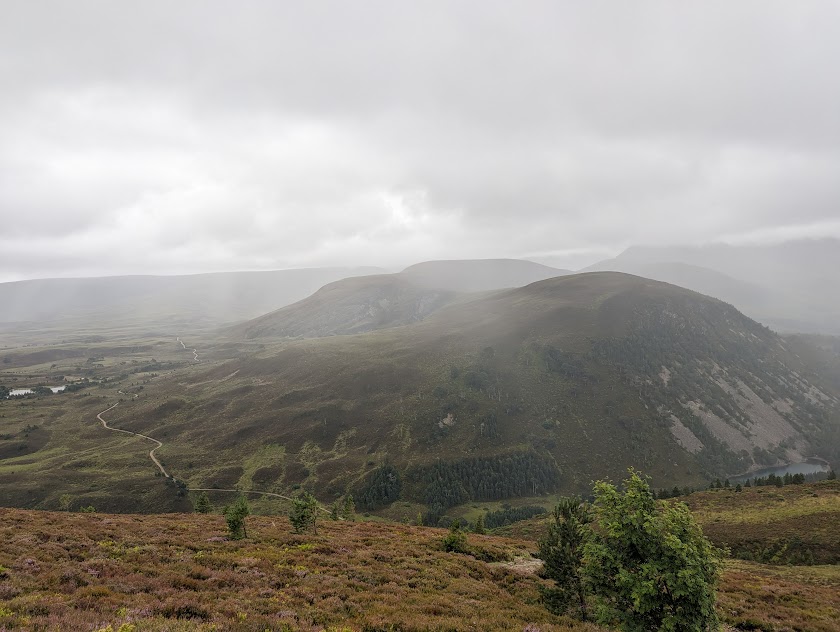
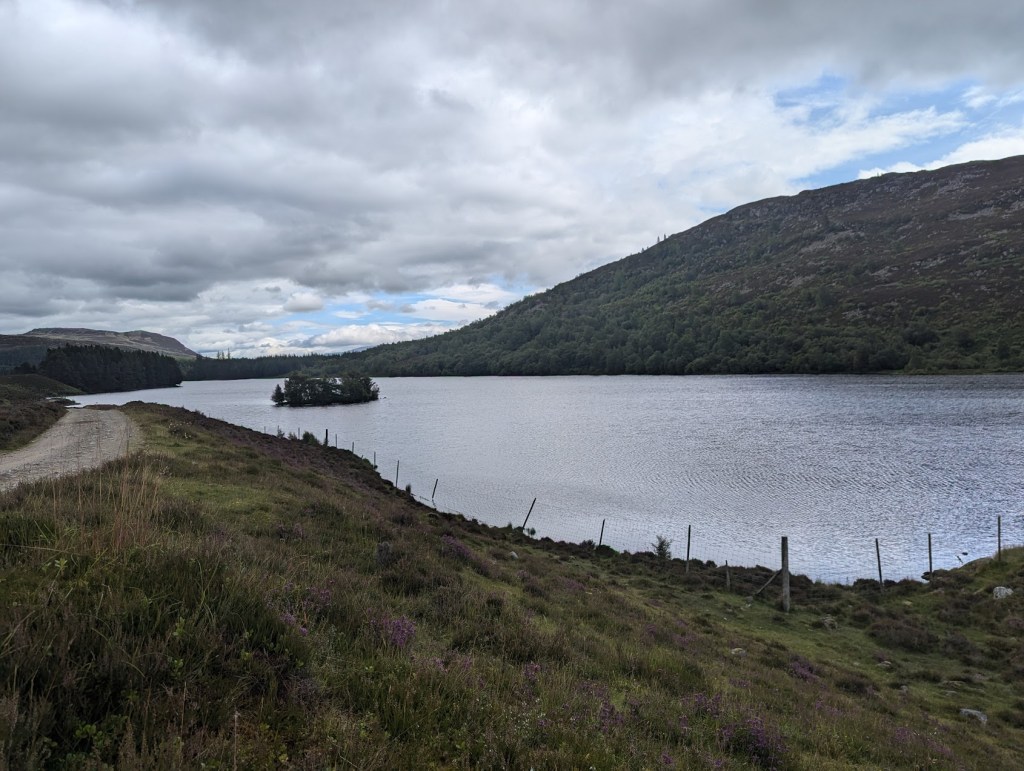
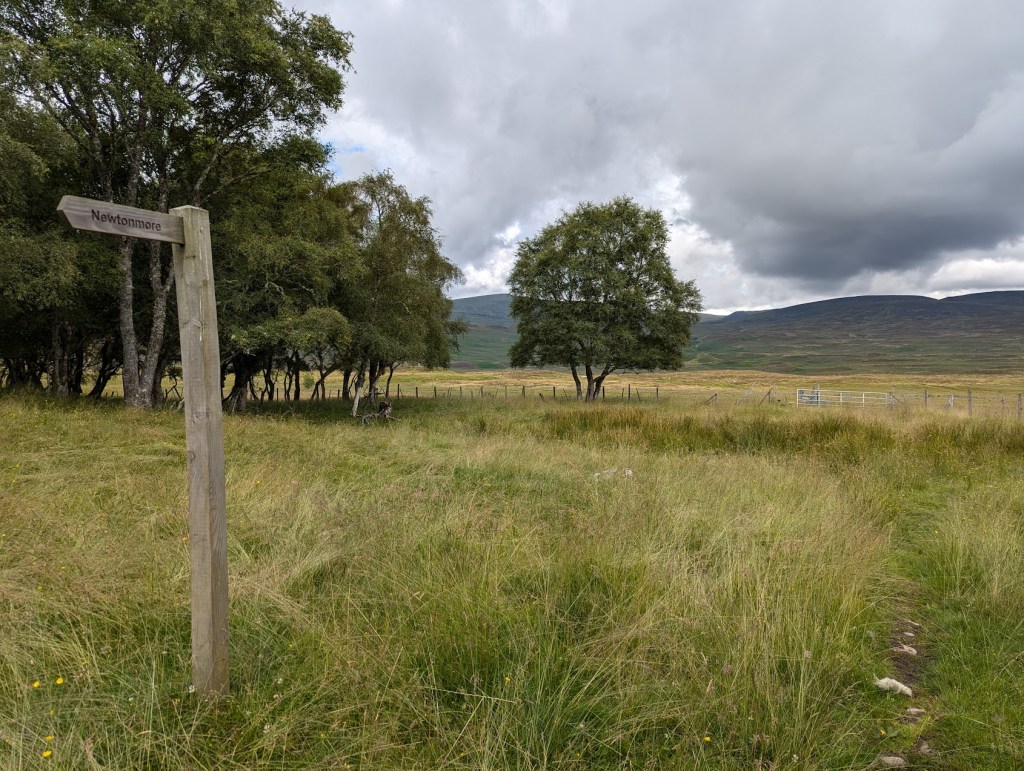
Silence, of course, makes me think of Scotland, a space that I didn’t let go of with everything else. After our stay in Crianlarich in 2021, I stayed in a couple more Scottish towns for a week at a time. Fort William in July 2022, Aviemore in July 2023, Newtonmore in July 2024. In each of these places I did the same thing – isolated myself and enjoyed the silence and solitude of wandering through the hills. The weeks off that I took in Scotland became necessary breaks – a way to shut off the computer and leave everything behind me. I convinced myself that I was going into the woods because “I wanted to live deep and suck out all the marrow of life” as Thoreau said, like I was looking for something that I didn’t have, but these trips were always defined in negation – as escape attempts – and so haunted by the job that I had paused to be there.
The h(a)unt happens from all sides and, at least for this blog, will now continue.

