My return to work after the birth of my son has been marked by a curious question. Everyone, almost as if reading off a script, asks “Are you getting any sleep?” or some variation thereof. As many have quipped, “sleep is not an insignificant human activity”, so of course it’s something that they ask about. However, the question is so often repeated that I began to find it deeply suspicious. In one encounter in a public place, I joked with a colleague that it was the only thing that people ask me, which was followed by us being passed and greeted by 3 different colleagues in succession, each of whom asked me about my sleep schedule.
There are doubtlessly many explanations for this, most of which are borne out of common decency and social politeness.
What else could you ask? Newborn babies are basically potatoes that eat, scream, and shit. They are cognitively and physically underdeveloped enough to require round-the-clock care in their first few months, which are often referred to as a “fourth trimester”. My son is an unfiltered id who consistently (and loudly) expresses conjunctive desiring – for the breast, for the warmth of an embrace, against the uncomfortable sensation of sitting in squalor, and so on – there’s nothing meaningful to ask about him, other than maybe the ways in which he is impacting the life experiences of his parents. Presumably, the questions about whether he’s a Trotskyist or a Maoist and how he takes his coffee come later.
What else is polite to ask? Newborn babies bring all sorts of uncomfortable feelings and experiences into the familial equation – almost all of which are not the subject of polite conversation and good social etiquette. Does your wife have any trauma and body dysmorphia post-birth? Are you both struggling with various forms of post-partum depression? Are you harbouring resentments towards each other due to an uneven distribution of care in the household? Is it hard to scale back on things you enjoy now that the reduced income of maternity leave is affecting your joint finances? Do you secretly want to just leave your baby in a bin? These are not the kinds of questions you can ask someone when you bump into them in the corridor.
Maybe they have children and want to bond over shared pain, or commiserate and offer their sympathies? Misery does love company, and my own experience with parental groups reaffirms that there’s nothing better for bonding with strangers than telling them how hard parenting is so that they can commiserate with you about it and share their own difficulties. However, this doesn’t explain why this question about sleep is asked by people without children.
Maybe there is genuine concern there? Whether they are a parent or not, the first few months of parenting are often compared to a form of “sleep torture” that, if it continues for an extended period of time, has deleterious long-term effects.“Ten percent of the babies I see are parent-killers” says a doctor quoted in the NY Times in 2011 in reference to their ability to enforce long-term sleep deprivation. More generally and as above, newborn babies can be a significant life change that happens in many diffuse ways that are difficult to quantify. Maybe the askers are being genuine and showcasing concern for my wellbeing and wanting to know that I am OK?
Despite the many potential explanations, none of them explain the glibness with which the question is asked or the sardonic and expectant smile with which people look at you as you reservedly reply. There is a peculiarly benign sadism in their smiles. There’s no conscious malice there, but rather it seems to be a quiet delight in the potential revelation that someone is sleeping much less than they normally would (and again, sleep deprivation being a widely used and recognized form of torture that irreparably damages the subject). A happy anticipation that someone might be about to tell you that they are suffering. What exactly is this sinister affect?
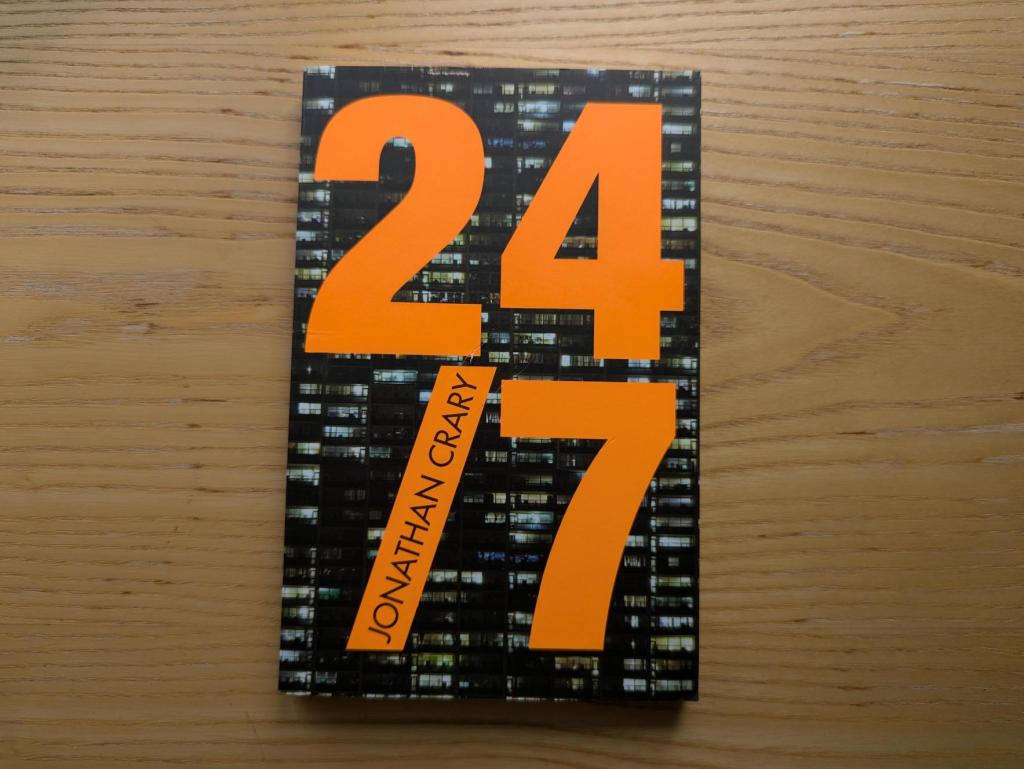
In 24/7: Late Capitalism and the End of Sleep, Jonathan Crary comments that “sleep is the only remaining barrier, the only enduring “natural condition” that capitalism cannot eliminate.” He recounts everything from military experimentation to reduce the need for sleep to its desperate monetization through apps, trackers, pills, machines, and sleep aides. Sleep is the great obstacle, the final all-too-human biological attachment that has yet to be overcome, meaning that a third of a potential working day is still wasted in unconsciousness. Crary recounts the ways in which contemporary capitalism mobilizes against sleep to create an economy in continuous process with no withdrawal, no pauses, and no time where the human is unproductive – “a non-social model of machinic performance”. Indeed, Crary paints the battle against sleep as a broad and general phenomenon, encompassing globalized mass culture and the shifts in the nature of historical time. That is to say, to render the subject available for a 24/7 capitalism, there needed to be a great restructure of human life, a smoothing and homogenisation across all of culture – from consuming the films and media to purchasing the same viral/cult products, to changes in patterns of farming and agriculture to render them more consistent, and even the spectacularization of American politics and its communication in global memes on the internet; all of this combines to create a uniform global subject with “the same” experiences at the same time, continuously transmitting the same information on a global scale. A global subject without time who is constantly “at work” in some form.
There is certainly truth to the idea of continuous work. For decades, long hours cultures have seen us working longer and longer hours at great cost to our collective mental and physical health. Our collective commitments to work are being increasingly linked to work death – the “the rise and grind ethos” of entrepreneurialism is not only pervasive but locatable at the centre of a perplexing productivity paradox wherein we work more hours, but work less effectively because we are collectively exhausted. In the excellent, Go the Fuck to Sleep: Well-Being, Welfare, and the Ends of Capitalism in US Discourses on Infant Sleep, Sareeta Amrute summarizes the pressures on parents of different class groups to sleep and train their infants to sleep. She summarizes yet another dimension – that sleep is necessary to return to work effectively.
“Sleep, as Crary (2014) suggested, is to be conquered by any means necessary, so that parents can move on to having a productive evening and children can experience ordered sleep. This middleclass dilemma represents one side of the way that neoliberal capital reconfigures care within the family as an ever-expanding set of demands for ensuring child well-being.”
“Have you yet conquered sleep?” asks the interlocutor. Have you yet disciplined and subjectivated your infant to capitalist mores so that you can continue to sell your labour effectively? The asking is itself collective disciplining – a reminder that both you and your new child must be disciplined for work, that it is essential that your new child is disciplined to sleep and wake on a cycle that is conducive to the standard working day. Don’t let your new child disrupt the sale of your labour (assuming that it is not already stymied by you being on maternity leave).
More importantly, outside of traditional work, the attention economy is the site of a continuous and brutal battle over the monetizability of your gaze. Everything you look at is a potential site for advertising, and so the competition to make you look at things is fierce. With increasing skill and aptitude in an era of infinite scrolling, every moment looking at a screen is work where your engagement – your clicks, your comments, your likes, your time – is productive labour that is exploited by a platform to sell advertising spaces.
Indeed, the expansion of what we might call “leisure-work” is most observable in the habits of new parents. While awake at 3am with your crying infant or shift-sleeping and getting by on a couple of hours per night – what else is there to do but transition into a pliant and vulnerable consumer-worker; swallowing up ads on late night TV, endlessly doomscrolling past ads on your social media feed, taking it subtle ads for products in parenting books or via parenting classes/groups (i.e. the relentless peer-to-peer marketing and astroturfing of products). These are particularly effective and insidious when they come with the promise of making your baby sleep longer, because exhaustion and sleep deprivation will make you willing to buy anything to get a few extra hours of rest (a form of psychic pain compliance). In some ways, the “attention economy” needs you awake and sleep-deprived to maximize the time that you spend looking at adverts – the quality of your looking, your viewing “productivity” as it were, is less important than the brute fact that you keep looking for as long as possible. In this context, one conspiratorially begins to wonder whether the entire billionaire-led pro-natalist movement is really a psyop to constitute subjectivities that sleep less and consume more adverts and purchase more products. One might also come to speculate that there are corollaries to this. For example, whether the “caffeine-industrial-complex” wants you sleep deprived so that you’ll visit and buy more drinks, for where is more convenient and comfortable to go with your baby than your local Starbucks?
The rank insidiousness of the attention economy means that content and forms of media are generated about sleep for you to look at while sleep-deprived. There is an absolute morass of articles on baby sleep – often with competing and contradictory advice born out of anecdotal experience of the stories of how a specific person managed their sleepless baby (take a look at just the articles on The Conversation as an example). Sleep consultants will sell you courses on your baby’s sleep – advertised to you on social media and shared and reshared by the various parent groups to which you belong. You can even buy a book to read to your child summarizing how frustrating and humorous it is that they won’t sleep.
Then of course there are the “spin-off” sleep related products. Whole genres of product that I was previously unaware of have unveiled themselves – sleeping bags that hold babies so that they can sleep (but not too tightly, that would kill them), special carriers that hold babies so that they can sleep (rated for “safe sleep” so you know that they won’t kill your child), bouncers that bounce a pram to simulate motion which will help your baby sleep, white noise machines with calming and customizable lights to help your baby sleep, bio-monitoring devices that alert if your baby stops breathing in their sleep. This list is endless. The marketing machine will continuously sell sleep-addled parents sleep-related garbage that they are susceptible to buying in the hope that the baby, and thus they, might get some more sleep.
All of this prompts the question, “Who or what asks me if I have been sleeping?” Is it a human person, a colleague, a friend, a family member who asks me “Are you getting any sleep?” or is it Capital – self-aware and speaking through their ventriloquized lips – reminding me that I am one step closer to being a true “capitalized subject” unsleeping, connected 24/7, an irritable but pliant zombie, docile because I have no energy and cognitive capacity to be anything else?”Who or what’s interests are really being served by me being sleepless? Who or what finds joy in it?
There is something deeply entangled and messy, both contradictory and complementary, about the relationship between declining birthrates and infant’s erosion of their parent’s sleep, and capitalism’s general antagonism towards non-productivity in the form of sleep. This is its own particular Somnology – a continuous exploration of the limits of how far it can push the collective human organism before breakdown. How little sleep can they survive on before they enter population collapse? A trial of human in limits. An experimentation with the human animal, just to see what it can do – one that we delight to see in process.

