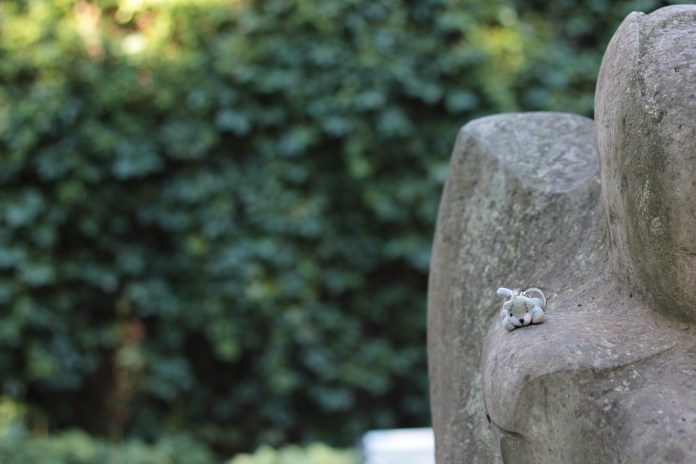
EGOS 2018 is over. The conference was held in Tallinn, Estonia and I had a great time exploring the city while taking my usual absurd pictures with a tiny stuffed wolf called, Penumbra.
 During the conference, I followed the stream titled Ethnography: Surprises, Stories, Speaking Out and wanted to chronicle a few thoughts on the presentations while they were still fresh in my memory.
How short can fieldwork be?
There have been several reflections that ask questions of the now intractable myth of Malinowskian fieldwork as this lengthy and labyrinthine project of extensive, immobile and detail focused study. The emergence of multi-sited ethnography or even ethnographic work that tracks organization across different sites and spaces has done much to challenge some of the presuppositions around what ethnography is “supposed to be”. However, quite often (at EGOS and elsewhere) I find myself viewing presentations on work that describes itself as “ethnographic” where the fieldwork is based upon a few interviews conducted on site or a few days at a site. I have perhaps no grounds to challenge other people’s attempt to experiment or test the limits of ethnography but I find myself wondering whether we are able to generate the depth of insight necessary for work to meaningfully understand the dynamics of a site, to become attuned to its mores, to be sensitive to its practices, or to be able to trace its conceptual lines and unique forms of thought. I also struggle with the idea that my scepticism towards the projects in which these colleagues are involved is a form of disciplinary conservativism on my part – some form of desire to keep things controlled, predictable, and as expected.

On encroaching positivism and the possibility of surprise
During the stream I watched with no small degree of concern as a colleague presented a piece of ethnographic work that had some undeniably positivistic undertones to its design – there was talk of “theory building” and “theory testing” and a conclusion of a similar type to “men demonstrate behaviour X more than women”. My concern was primarily ideological and relates to what I mentioned earlier regarding disciplinary conservativism. I have trouble finding grounds to say that “this is not ethnography” and pontificate that it should be about exploration, understanding the lives of interlocutors or the site where they live – a confrontation with an Other that represents an analytical, metaphysical, and existential shock that confronts oneself and the academy with radical alterity. The best I can do is to appeal to authority and quote someone like Judith Oakley saying “anthropology is also an artistic and creative engagement, not scientific mimicry.” What Oakley sketches is the fundamental uncertainty about the outcomes and activities of fieldwork; one never knows what might happen. But who am I to say that ethnography cannot be about theory testing and design – that this experiment must be abandoned. I also reflected on the fact that I might be jealous because, while a journal like Organization Science will never publish the kind of Deleuze-inspired ethnographic work that I want to write, it might very well publish this attempt to make ethnography more “scientific”.
At the end of the colleague’s presentation, I made an intervention on the order of asking whether they thought that this method of theorizing beforehand and then testing precluded the possibility of “surprise” (reflecting not only on the conference theme but my supervisor’s invocation that good ethnography means opening yourself up to be surprised by the field) but I’m not sure that this was something that they were able to work with.
On silences
One of the themes that emerged from the panels was “silence”, the things that we do not say or speak about that emerge in the course of ethnographic work. This related to questions of whether ethnography should be necessarily activist, particularly when it deals with the stories of exploited, at risk or suffering groups are well established.
One paper presented at the stream clearly dealt with a sensitive subject that was quite personally important to the presenter. Their paper explicitly listed the ambition of advocating and making salient the very important cause that the author had first-hand experience of and on which they were now reporting. The paper, however, stopped short in its theorization around the work of Marquis de Sade because it wanted to (very understandably) present the people upon whose behalf it sought to advocate in a positive light. I couldn’t help but reflect on the choice that this colleague was confronted with, to either focus on their advocacy to give voice to those who were suffering or to develop a theoretical position – via Deleuze or Bataille- which might suggest that desire could become so perverse and distorted by social coding that their interlocutors could be said to desire their suffering. As I made a comment which suggested the latter, I wondered if I should have kept silent because the colleague was likely aware of this struggle between theorizing and advocating and if pressed would, unlike me, probably choose the latter.
The question of when to intervene or inject question or commentary is one that I think that I obsess over. I try to keep to a rule at conferences that I won’t say anything unless: a) I think that it will help the discussion
b) I think that the presenter will be able to meaningfully use/work with the question and c) I can do it without talking about my own research.
I’ve evolved this rule-set over years of watching with embarrassment as other conference attendees fail to adhere to them. We’ve all been in a room where someone derails an interesting conversation to ask their own narrow question, where someone tries to shame a presenter with a difficult question, or where an older professor goes on about their own work until the whole room forgets what the presentation was about. I sometimes reflect that this silence makes me guilty of not sufficiently advocating for my own expertise and whether facing silence after a presentation would be worse than breaking one of the above guidelines. I kept thinking about this colleagues paper for some time, wondering how I would write it and if in so doing, I might be complicit in trying to silence those who the presenter was trying to speak for.


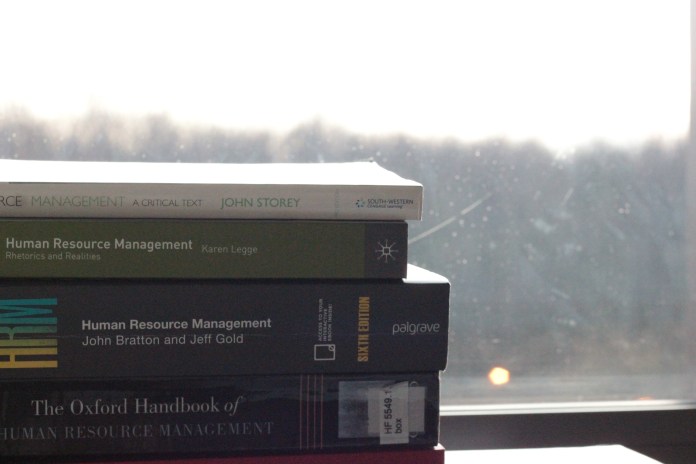 While I greatly enjoyed the experience of the course there are a few things that I continue to reflect upon while I wait for the final exam scripts to come in. I’ve decided to pen them here in the hopes that I might develop them into a more substantive paper at some point. I use the second person as a way of addressing the text to a reader (perhaps my future self) who does not quite remember what it’s like to convene a module as an


 Sideeq Mohammed