
In The Trouble with Being Born, Cioran reflects: “Ideas come as you walk, Nietzsche said. Walking dissipates thought, Shankara taught. Both theses are equally well founded, hence equally true.”
I thought about this often over the last few days, suggesting that Cioran was both wrong and right, in his observations. I think that he would have found that kind of ambivalence amusing. There is a certain peculiar complementarity or synergy between Cioran’s acerbic pessimism and the dour and severe weather on the Munros over the last week where I went to try to get a bit of a break from work.
After the last year of lockdowns, work, and being stuck inside, being on my own in the hills felt a bit like a dream, or at least the kind of dream that Cioran describes when he comments: “I suppressed work after word from my vocabulary. When the massacre was over, only one had escaped: Solitude. I awakened euphoric.”
*
My first Scout Leader was Joel Beharry at the 1st Naparima College Sea Scout Troop. I don’t have any photos of him, but I remember him as a kindly and paternal figure who taught me to respond to life’s challenges with temperance and good humour.
We would often go on hikes through the undulating rainforests of Trinidad to see a waterfall or some other natural feature. Often, while dripping with sweat and the exertion of navigating the at times claustrophobic paths, Mr. Beharry would pause, and staring into the middle distance would ask “Where allyuh does bring me boy?”
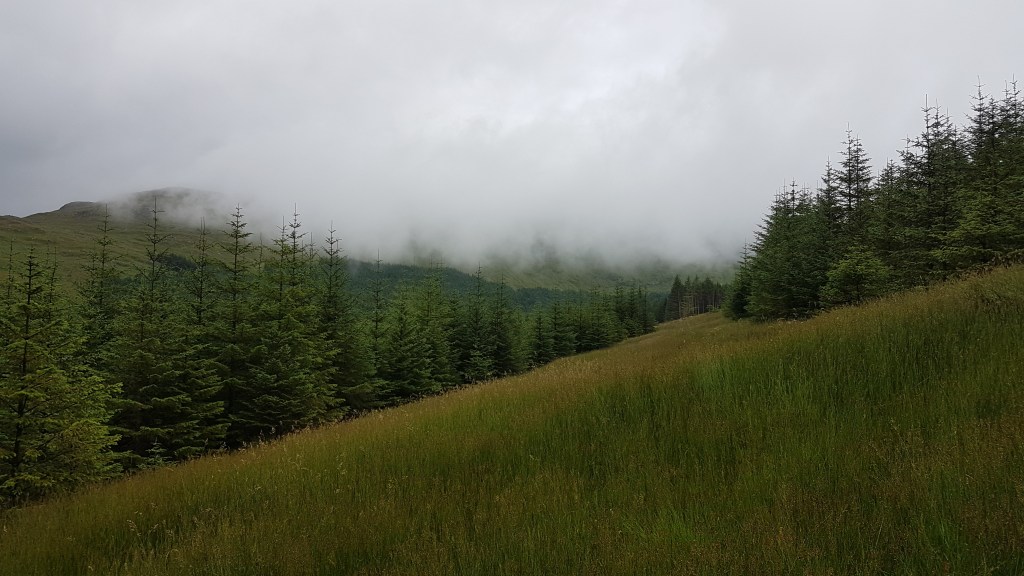
As a boy, I recalled finding this question flummoxing. Surely, he was the one who brought us, to what was usually a humid and mosquito infested patch of forest, not the other way around. As a man in his early thirties, I now understand what Mr. Beharry was asking, because I asked the same question of no one in particular while standing ankle deep in mud looking for an unmarked footpath through an evergreen Scottish forest, trying to scale a ridge to get to Cruach Ardrain, which I could already see was covered in cloud.
*
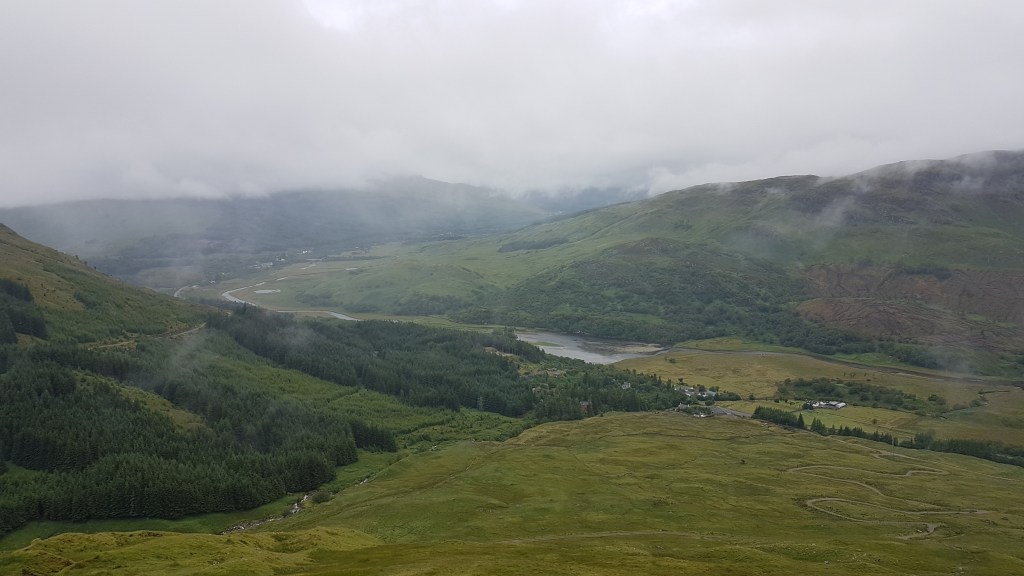
The poem Alone by Edgar Allan Poe hangs on the wall of my flat. I’ve seen many interpretations of it, ranging from it being a poem about deeply loneliness and isolation to a reflection of Poe’s personal traumas, experienced during adolescence. The famed final line, “And the cloud that took the form […] Of a demon in my view” has been analyzed and assayed, and is understood to refer to a manifestation of the author’s own hatred of his image, resentment of his poor mental health and identity. The demon is a warped version of himself, perhaps seen in a mirror or as he imagines being seen by others. Such readings are tied to narratives about the author that lie in his past or present. But what of the future? I think about the demons that might emerge out of the future, crawling back to us through time and events which have not yet happened which nevertheless leave us dazed and delirious in the present, as I picture the clouds rolling over the mountains in my minds eye.
*
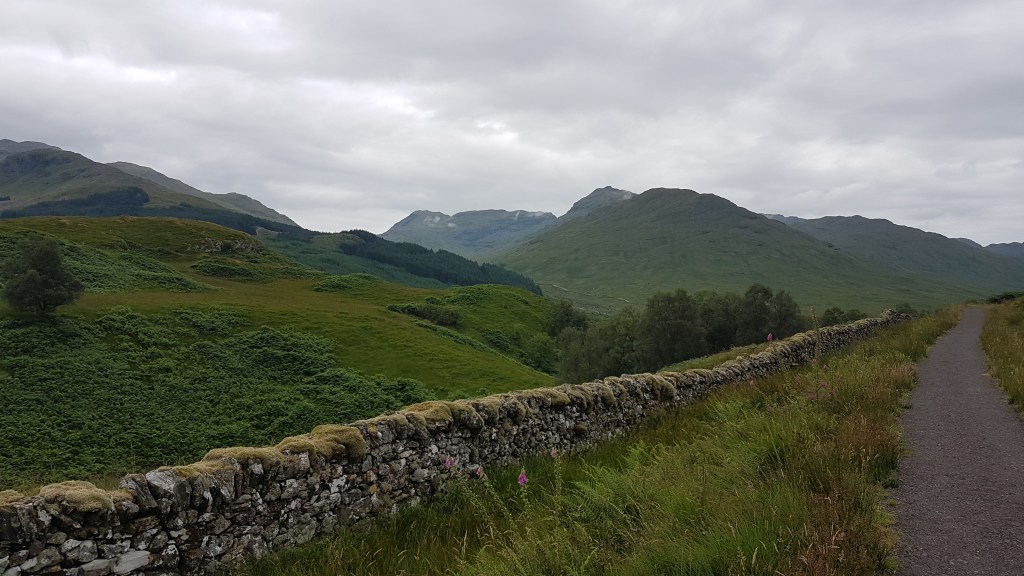
I’ve made no secret of the fact that Tolkien is one of my favourite authors and that his writings had a tremendous impact on my as a boy. In The Fellowship of the Ring, there’s a song that Bilbo sings as he leaves the Shire, destined for Rivendell:
The Road goes ever on and on
Down from the door where it began.
Now far ahead the Road has gone,
And I must follow, if I can,
Pursuing it with eager feet,
Until it joins some larger way
Where many paths and errands meet.
And whither then? I cannot say.
Different versions of the song appear at different points in Tolkien’s oeuvre, but this is the one that I memorized and is the one that I sing to myself as I walk. Over the years I’ve made up more verses and more lines. I don’t know if the tune is one that Tolkien intended, but it matches the rhythm of my normal walking pace and is a comforting song that speaks to a certain freedom and openness of life.
*
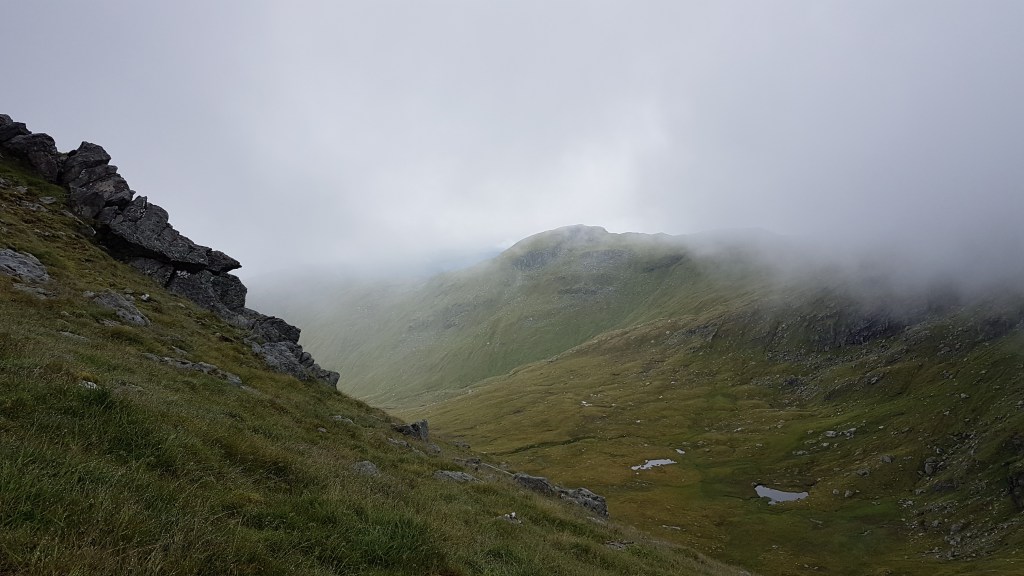
If you are sad about having to leave Scotland, don’t watch Justin Kurzel’s Macbeth on the train home. Yes, the score is magnificent, and the imagery of death and damnation really manages to capture the core of Macbeth’s arc as a character, but the movie is basically a two hour “Visit Scotland” advert. Nothing is more depressing than watching a scene of a maddening Macbeth wandering through a desolate moor to find the witches and thinking: “I want to go there…”
 Sideeq Mohammed