Forward
In Winter 2016, I took up a rather interesting challenge. A student walked into my classroom carrying a copy of a rather large book. I took one look at it and guessed that it was an “airport bookshop” style management guru book, feeding cheap advice on what to do in organizations in order to placate anxious managers and students. He saw the look on my face and started to defend the books quality. Beyond making a face and shamefully judging a book by its cover, however, I couldn’t articulate why I was so apprehensive about this book.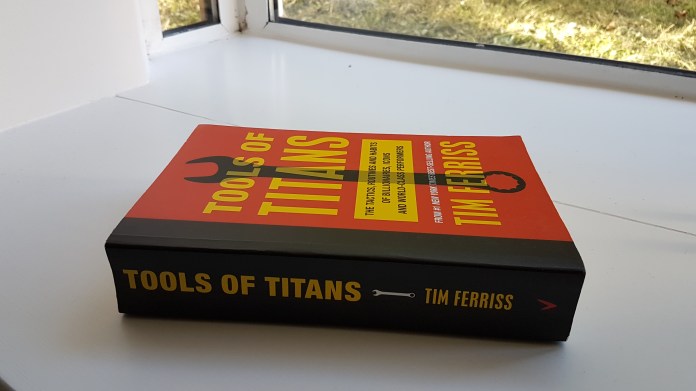
Anyone who knows me will be able to predict how I reacted to not knowing what to say about something. I bought the book, read it, and wrote a review of it.What follows is that review, one where I try to play with giving and withholding details in order to comment on this book specifically and this type of book in general. I was also quite jaded at the end of my PhD and so I took the review as an opportunity to take potshots at academic writing. I ended up reworking this review into a paper titled ‘Understanding microfascism: Reading Deleuze and Guattari alongside management guru texts’ which hopefully will be published soon, and while digging on my hard-drive I found the following short piece and decided to post it here rather than letting it gather digital dust in obscurity elsewhere.
[insert book title here]
With the resurgence of authoritarian “strong man leadership” and the cult of personality around leaders themselves in our collective popular culture, it is perhaps no surprise that [insert book title here] is at the top of many “Bestselling Books about Leadership” at the close of 2016. [insert author’s name here] is well known for their image as a successful investor and entrepreneur, with their previous titles like [insert other book title here] trading upon this in order to sell a rhetoric of increasing efficiency and optimizing everyday life. With their newest book [insert author’s name here] broadens their scope, offering lessons from the nearly two hundred “world-class performers” that the author interviewed over the last few years. While critical scholars might argue that such a text has little of value to offer to rigorous, critical, academic analysis, being, at best, no more than a representation of the £6 billion management consultancy industry in the UK, a cheap “guru guide” [insert names of important professors here] to “managing” which tells the audience what they already know in pithy and quasi-inspirational tones and at worst, a blatant cash grab that builds off of the publicity for a highly successful podcast, which features [insert author’s name here], in order to bolster sales. However, following the precedent set by other CMS researchers like [insert reference to work of PhD supervisor here] and [insert reference to work of PhD supervisor’s conference drinking buddy here] this review aims to take the work of [insert author’s name here] seriously and understand it on its own terms, placing it into dialogue with the logic of [insert CMS buzzword here] and [insert half-understood concept from obscure philosopher] in order to suggest that rather than dismissal or readers of [insert journal name here] might find a truly “transformational” understanding of leadership in the writing of [insert author’s name here].
As such, let us begin from the proposition that there is more complexity to [insert book title here] than one would first assume. Though it seems to trade a crude kind of macho, [insert superfluous adjectives] bravado that speaks not only to the image of the leader as a great hero or messiah, but to the deep-seated anxiety and insecurity that underpins much of the popular literature on leadership and leads to the production of texts like this in the first place, [insert commentary cribbed from whoever is popular right now in critical leadership studies here]. There is, to be fair, no shortage of this and the Forward to the text, written by [insert name of popular celebrity here], speaks about how he is not a “self-made man” but rather is one who “stood on the shoulders of giants”. This is the logic by which the book operates, guiding the reader through, over the course of 674 pages, a wealth of stories about the habits of strong leaders who [insert leadership buzzwords here].
Divided into parts with labels like “Healthy”, “Wealthy” and “Wise”, [insert book title here] seems to flaunt itself before the critical gaze, unconcerned in the face of chastisement because it is lightheaded at the thought of the sheer volume of money that it will make in sales.
Indeed, while [insert book title here] can be read as the climax of a society-wide and Business School cultivated masturbatory obsession around the strong leader (the book contains some 101 “profile chapters”, each focusing on a different “transformational leader”, one whose characteristics, qualities and successes are extolled as the [insert pithy catchphrase from book’s blurb here]) this is inadequate to the sheer magnitude of the project of [insert book title here]. The star studded list of giants whose shoulders the reader might stand on include Olympic gymnastics coaches, Professors and PhD’s in everything from Molecular Pharmacology and Physiology to Neuroscience, doctors who were once endurance athletes, CrossFit trainers, professional wrestlers, high profile investors off of the cover of Forbes magazine, politicians, developers and founders of some of the mainstay websites of the contemporary internet, Oscar nominated film-makers, billionaires, hedge fund managers, professional snowboarders, CEO’s, master chefs, Navy SEALs, Grammy nominated musicians and popular actors; all of whom have a small space in [insert book title here] to share their wisdom and insights on life and being successful at living. However, the constant emphasis on adopting the life habits of “great men” [insert feminist critique here] and various health and wellness routines evokes the image of the transformation of a man into some manner of drug-enhanced, low-bodyfat, business-savvy guru who speaks only in maxims about “success” and “motivation” rather than any of the above. A Gregor Samsa for the modern age. [insert witticism based on Kafka’s original German here].
However, despite what nightmarish imagery can be conjured about its content, what is perhaps noteworthy about [insert book title here] is its boldfaced simplicity. It wants to be nothing other than an instruction manual for how to be a great leader. There are no footnotes, no references to previous work done in the field, no “obligatory references”, no “positioning of the work”, no “theory” bandied about and yet, even if one might critique the rigour of the “200 interviews” that form the books basis, [insert book title here] is a qualitative study underpinned by a philosophical project of holistic wellness, mastery and development of the kind more common to ancient Greece than contemporary academia. All of this, one might contend, is in the writing, or, more apropos, in the ineffable ways in the writing constructs its reader – an eager young millennial struggling for a sense of purpose or direction, likely to be enchanted by stories of “great men” who were successful through a series of habits or qualities that you too can cultivate. Such a reader might peruse this book and be expected to learn everything from where to meet high profile people, how to exercise more effectively, what books to read, habits to adopt to deal with ennui. [insert book title here] is thus, in its coverage of topics as diverse as investment strategy in relation to [insert new business trend here] to why MBA programs are a 2-year vacation that look good on one’s CV, from work-out tips from people who’ve climbed Mount Everest to many other instances of what philosopher Daniel Dennett termed “deepity” (“The basics are the basics, and you can’t beat the basics” or “Life is a continual process of arrival into who we are”), a startling caricature of the life of its target audience, insofar as it seems to suggest a group so fatigued by the trials, tribulations and anxieties of modern life that they need advice with [insert list that will shock a CMS reader, like the mattress buying checklist or the constant array of “healthy living” tips, here]. One could almost be duped into believing that one were reading a “modernization” of classic philosophical aphorisms, like those of Nietzsche or Seneca for [insert book title here] has as much life affirming and positive insight in its “deepity” to help one cope with modern life as any of the dusty volumes that organizational scholars dredge from the library in order to make themselves “sound smarter than everyone else” [insert reference to anyone within CMS who has moaned about “academic writing” here]. Indeed, [insert author’s name here] shares this concern and [insert reference to story about author’s rejection of MBA programs based upon his dislike for academics who use too many big words and PowerPoint slides here] seems to suggest that one might find a more thorough and grounded education outside of the academic university. Though recent scholarship within CMS [insert a number of references to publications by members of the jorunal’s editorial board in order to mask a prayer to Dvalin, the Norse rune-god, asking both that this review be published and that the entire edifice of “academic writing” which supports a sentence like this one could burn ingloriously to the ground, here] has done much to address concerns around writing and pedagogy, what we might see in [insert book title here] is an unparalleled knowledge of audience. Such a tailored approach enables it to speak directly and prescriptively about how they may “transform”.
Like so many of these train station bookshop “leadership guides” [insert book title here] will like fade fast, into the discount bin; its status as a transformative bible for a 21-year old, final year Bsc Management student from a small British town with dreams of becoming a successful entrepreneur dwindling into the aether of memory as the book that he spent two weeks swearing to live his life by gathers dust on a shelf or is used to elevate a computer monitor. However, one wonders whether the critical scholars who number amongst [insert journal name here] audience might find the text as transient, or whether they might find something of value in the way that [insert author’s name here] writes, in the way that he draws in and captures the same audience that we would want to in order to ensure the future of our discipline. These are no doubt our students and it is worth speaking to them.
In the least, the readers of [insert journal name here] might find a reference point for critique in [insert book title here]. All too often CMS caricatures “the mainstream”, to the degree where this reviewer wonders if the readers of [insert journal name here] can remember the last time that they read a book that was on a list of “Best Sellers in Business”…
 Sideeq Mohammed